How Qlik is expanding the possibilities of Agentic AI
Artificial intelligence is changing the way organisations work with data. Until recently, much of the conversation around AI in analytics focused on asking questions, finding insights and understanding what had happened. The next step is more ambitious: using AI to anticipate what might happen, support decisions and help organisations act on those insights.
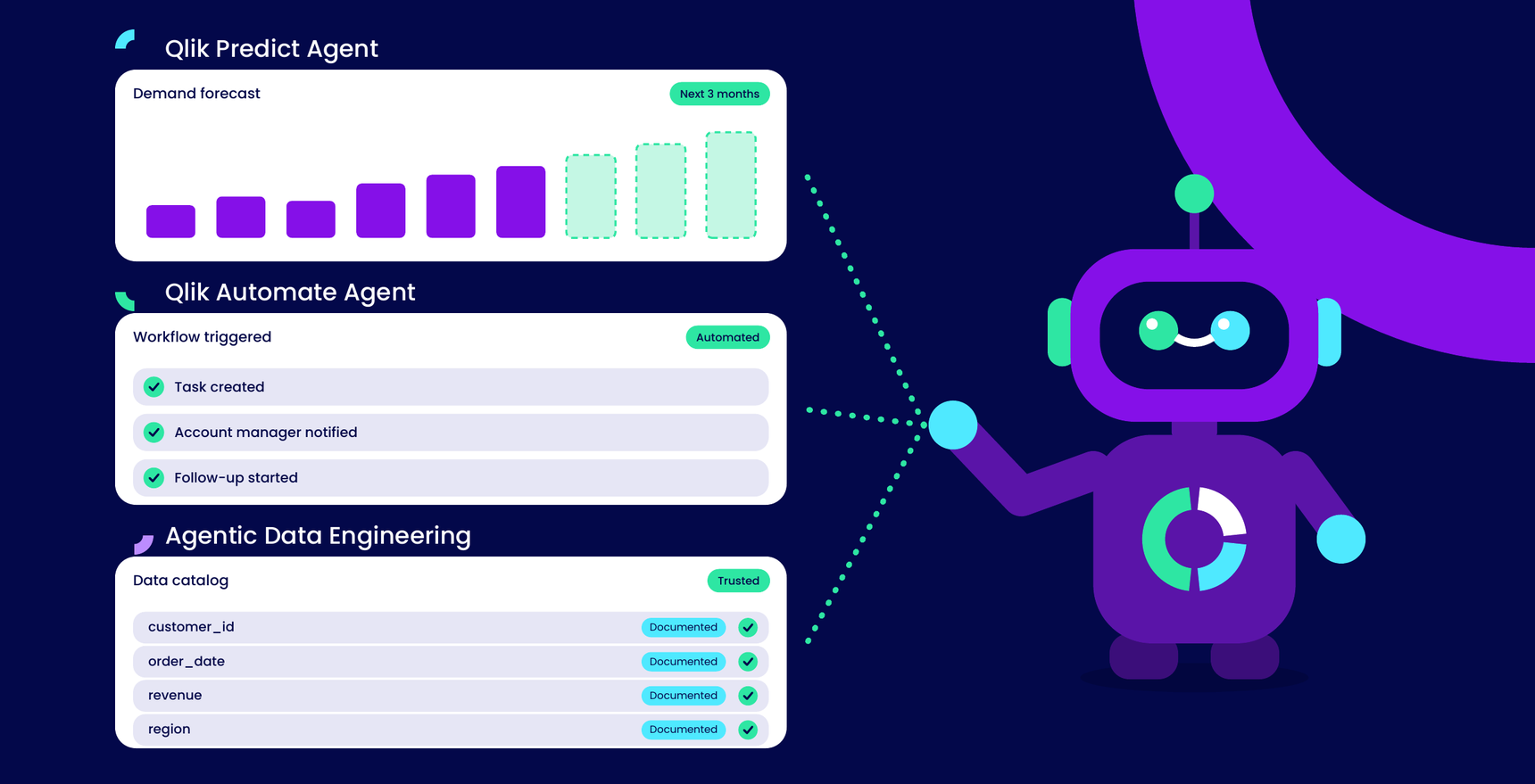
With its expanding Agentic AI capabilities, Qlik is moving in that direction. Its latest developments bring together predictive analytics, workflow automation and AI assisted data engineering. Each addresses a different part of the journey, but together they point towards a more connected way of working with data.
The question is no longer just what your data can tell you. It is also what you can anticipate, what you can do about it and whether your data foundation is ready to support it.
From understanding the past to predicting what comes next
Traditional analytics helps organisations understand what has happened. Dashboards and reports provide visibility into performance, highlight trends and help teams investigate changes. This remains essential, but it does not always answer the next question: what is likely to happen?
This is where Qlik Predict Agent comes in. Predict Agent allows users to build predictive models using natural language and existing data, without requiring machine learning expertise. Rather than limiting analysis to historical performance, teams can explore possible future scenarios and gain insight into the factors influencing them.
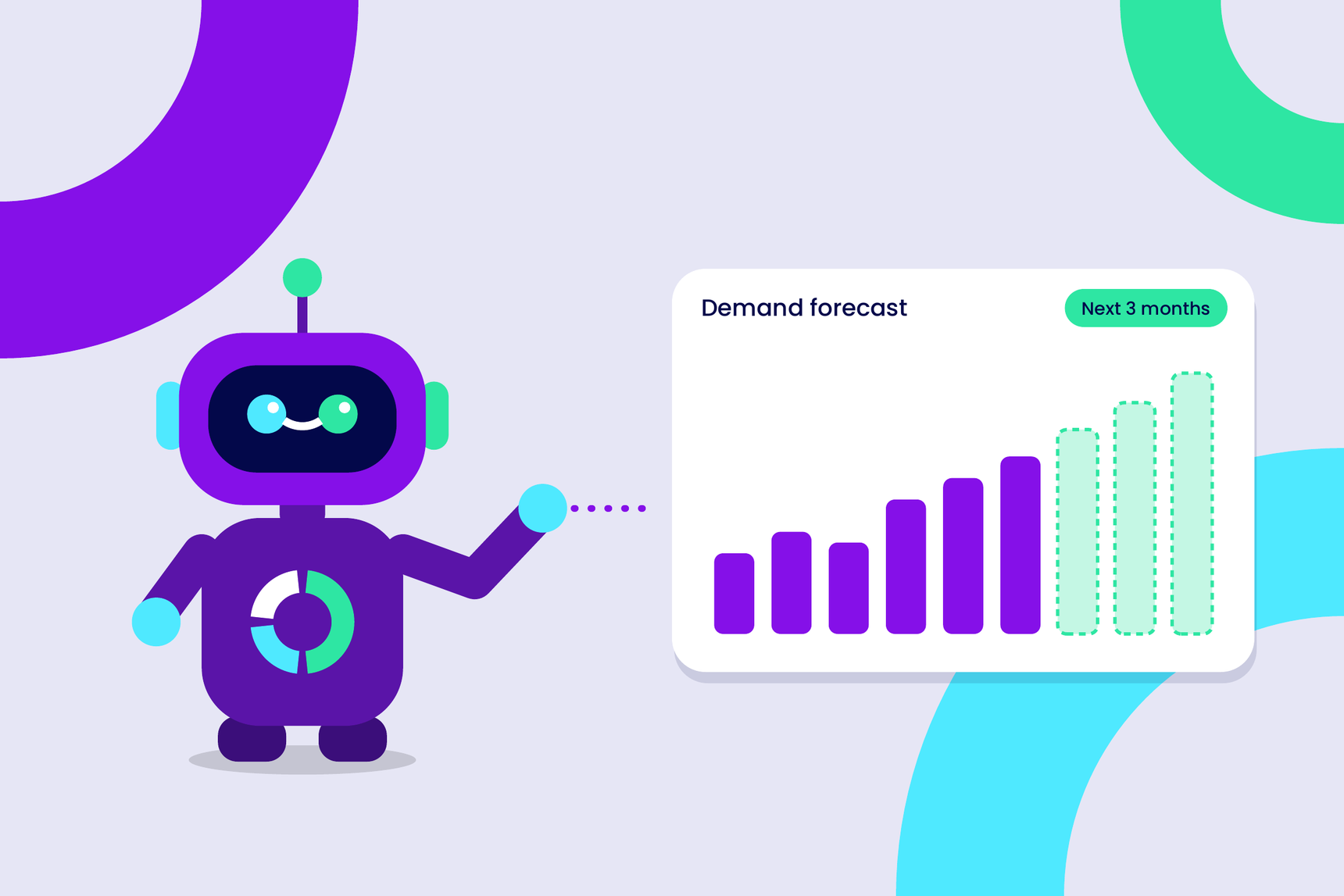
Imagine a sales team noticing that demand for a particular product is increasing. Instead of simply reporting the trend, they can ask: What will demand look like over the next three months?
Predict Agent builds the model, explains the key drivers and provides a forecast. This gives the team an opportunity to prepare for potential changes rather than wait until they become visible in the usual reports.
Predictive analytics becomes particularly valuable when it is connected to the decisions an organisation needs to make. Forecasting demand, for example, can help teams consider stock levels, production planning or commercial priorities earlier.
From insight to action
Identifying a trend or anticipating a change is valuable, but insight alone does not guarantee action. In many organisations, the next step still depends on someone interpreting the information, deciding what needs to happen and initiating the relevant process.
Qlik Automate Agent aims to shorten that distance. By connecting AI reasoning to workflows across connected systems, Automate Agent helps users move from insight to decision and action. Natural language can be used to trigger workflows, linking analytical insights to the processes that follow.
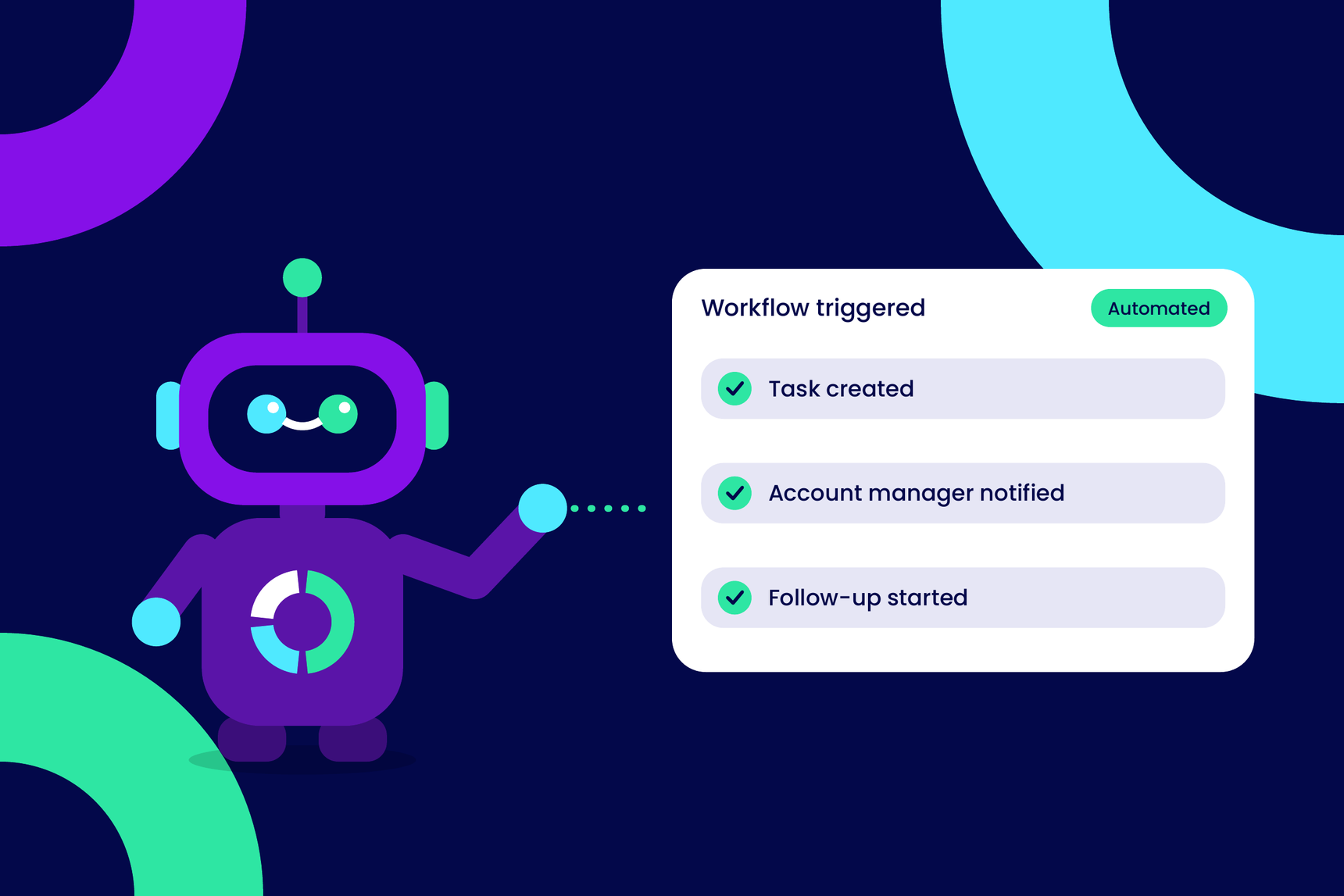
Consider a key customer who has not placed an expected order. Analytics identifies the change in ordering behaviour. Traditionally, this might result in a notification to the sales team, leaving someone to investigate and decide what to do next.
With an automated workflow, the next steps can be initiated directly: create a task, notify the account manager and start the follow up process.
This does not mean automating every decision or removing people from the process. The opportunity lies in identifying the situations where automation can reduce manual steps, help teams respond more quickly and ensure that important insights do not get lost between systems.
The real value of Agentic AI is not simply answering questions. It is helping organisations move from knowing to deciding and doing.
Building the data foundation for AI
Predictive analytics and workflow automation open up new possibilities, but they also make one requirement more important: the data behind them needs to be reliable, accessible and well understood.
An AI application is only as useful as the data it can work with. Before an organisation can put AI to work, its teams need to know where relevant data is located, whether it can be trusted, what individual data fields mean and who is responsible for them.
These questions are part of the data engineering process, and Qlik is bringing AI into this area as well.
Its new capabilities address several important steps:
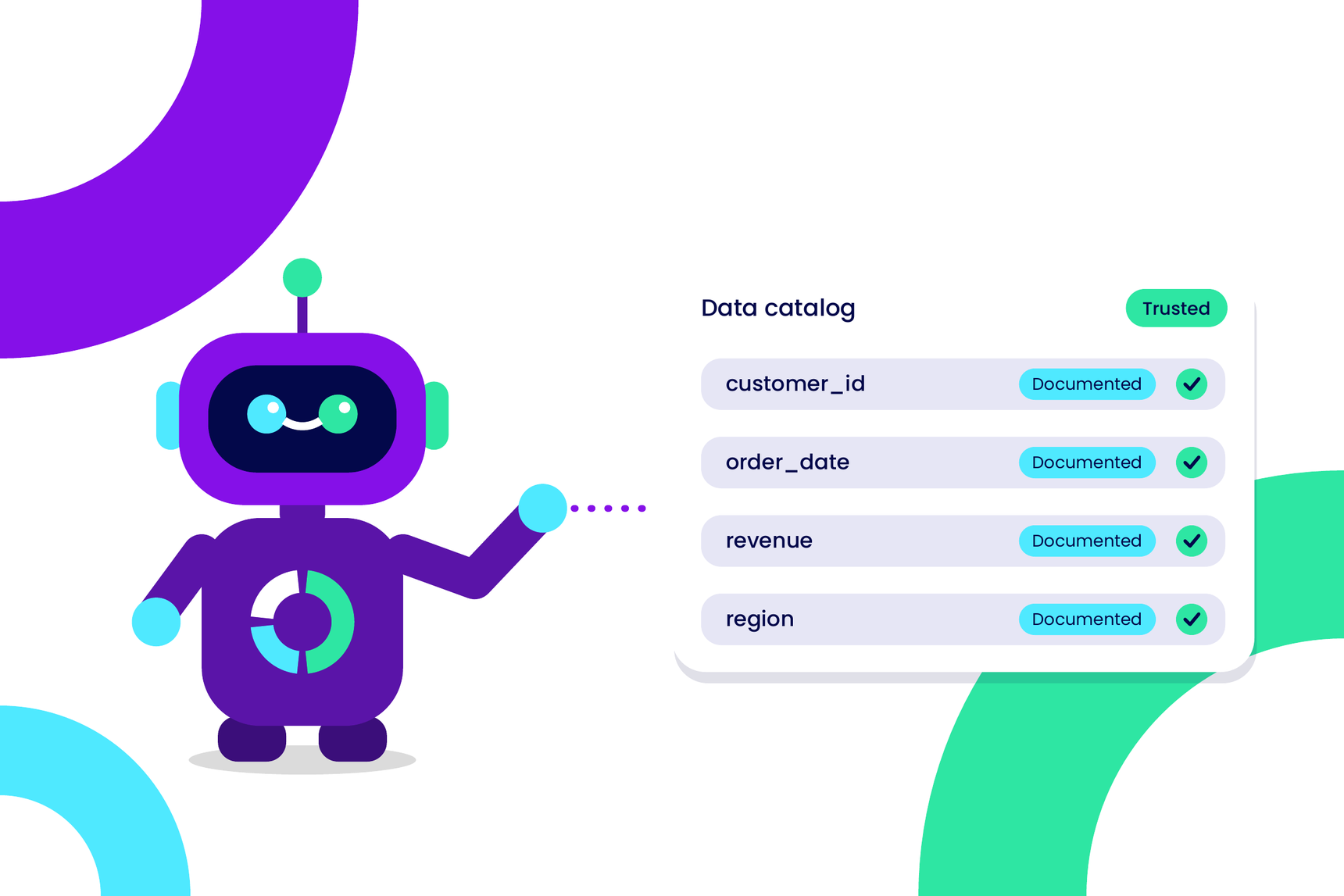
Catalog & Business Glossary Agent helps teams find and understand their data.
Data Quality Agent supports the checking and improvement of data quality.
Data Product Agent helps create and manage trusted data products.
Declarative Pipelines bring AI into the process of building data pipelines.
Together, these capabilities aim to reduce the manual effort involved in preparing and managing data, while helping data teams establish a stronger foundation for analytics and AI.
Imagine an organisation preparing to launch a new AI use case. Before the application can use the required information, someone needs to identify the relevant data, understand its meaning, check its quality and establish who owns it.
AI can increasingly help data teams answer these questions and act on them. This does not make data architecture, governance or quality less important. On the contrary, it makes them even more central to successful AI adoption.
Three capabilities, one connected direction
Predictive analytics, workflow automation and AI assisted data engineering address different challenges, but their value becomes clearer when considered together.
Predict Agent helps organisations explore what is likely to happen next. Automate Agent helps connect insights and decisions to actions. Agentic Data Engineering supports the data foundation needed to make these capabilities useful and reliable.
This represents a broader evolution in the role of analytics. Data is no longer used only to explain performance after the fact. It can increasingly help organisations anticipate developments, respond to changing circumstances and improve the way work gets done.
However, introducing these capabilities is not simply a matter of switching on new technology. Organisations still need to identify the right use cases, understand which decisions can benefit from predictive insights or automation, and ensure their data is ready to support them.
That requires a combination of technology, data expertise and a clear understanding of business priorities.
Making Agentic AI relevant to your organisation
The possibilities of Agentic AI are expanding, but the most important question remains practical: where can it make a meaningful difference in your organisation?
It might start with better demand forecasts, a more responsive customer follow up process or a more reliable data foundation for a new AI initiative. The right starting point depends on the decisions your teams need to make and the challenges they want to address.
At Beyond Data, we help organisations connect data, analytics and AI with their business objectives. From data architecture and integration to analytics, predictive insights and AI adoption, we look beyond individual features to identify where technology can create real value.
Agentic AI does not start and end with an agent. It starts with understanding your business, building on trusted data and connecting insights to meaningful action.
FAQ
Agentic AI refers to AI systems that can do more than generate answers or analyse information. AI agents can interpret data, identify patterns, support decisions and perform specific actions within defined workflows. In a business context, they can help organisations move from insight to action, while keeping human oversight and business objectives central.
Qlik Predict Agent enables users to build predictive models using natural language and existing data, without requiring specialist machine learning expertise. It helps organisations forecast future outcomes, understand the factors influencing those forecasts and use predictive insights to support business decisions.
Qlik Automate Agent connects AI reasoning to workflows across connected systems. It helps organisations turn insights into action by triggering automated tasks and processes. For example, when analytics identifies an unexpected change in customer behaviour, a workflow can notify the relevant account manager and initiate a follow up.
Qlik's Agentic Data Engineering capabilities bring AI assistance into the processes of discovering, understanding, improving and preparing data. They include tools such as the Catalog and Business Glossary Agent, Data Quality Agent and Data Product Agent, as well as AI assisted declarative pipelines. These capabilities help data teams build and maintain the trusted data foundations needed for analytics and AI.
The Catalog and Business Glossary Agent helps users discover and understand data assets by providing information about their descriptions, categorisation and business context. This makes it easier for organisations to find relevant data and understand what it represents.
The Data Quality Agent helps data teams assess and improve data quality. It can suggest quality rules using natural language, support the identification of data quality issues and provide quality scores and freshness information to help users assess whether data is fit for use.
The Data Product Agent helps teams create and manage data products through conversational interactions. It can check information such as ownership and dependencies, helping organisations manage data products more consistently and avoid unnecessary duplication.
Declarative pipelines allow data teams to define data transformation and integration requirements using YAML or natural language prompts. AI tools can assist in building and deploying these pipelines, helping teams develop and manage data workflows more efficiently.

Ready to explore what Agentic AI could mean for your organisation?
Whether you want to improve forecasting, automate business processes or build a stronger data foundation for AI, Beyond Data can help you identify the right opportunities and turn them into practical solutions.